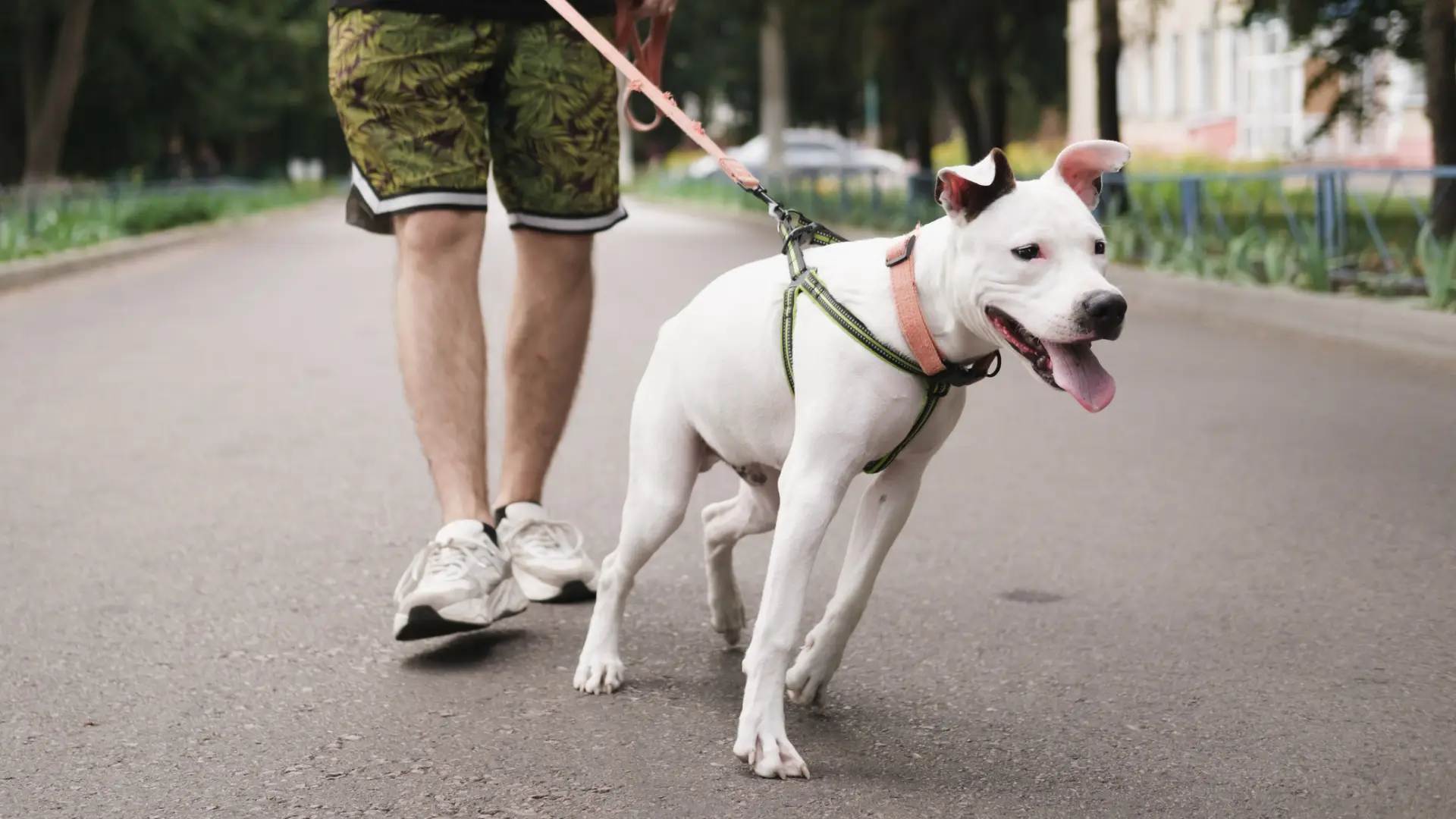
Walking a dog that barks, lunges, growls, or “loses it” when they see another dog or person can be exhausting. If you’re searching for how to train a reactive dog, you’re probably not looking for a quick trick; you want a plan that actually makes walks feel safe and manageable again.
Reactivity is common, and it’s often fixable with the right approach. The goal of reactive dog training isn’t to “shut your dog down.” It’s to change how your dog feels about triggers and teach skills that help them stay under control. This guide explains what reactivity is, why it happens, and how to start dog reactivity training in a way that’s realistic for owners in Onslow County, NC, and surrounding areas.
What Is a Reactive Dog?
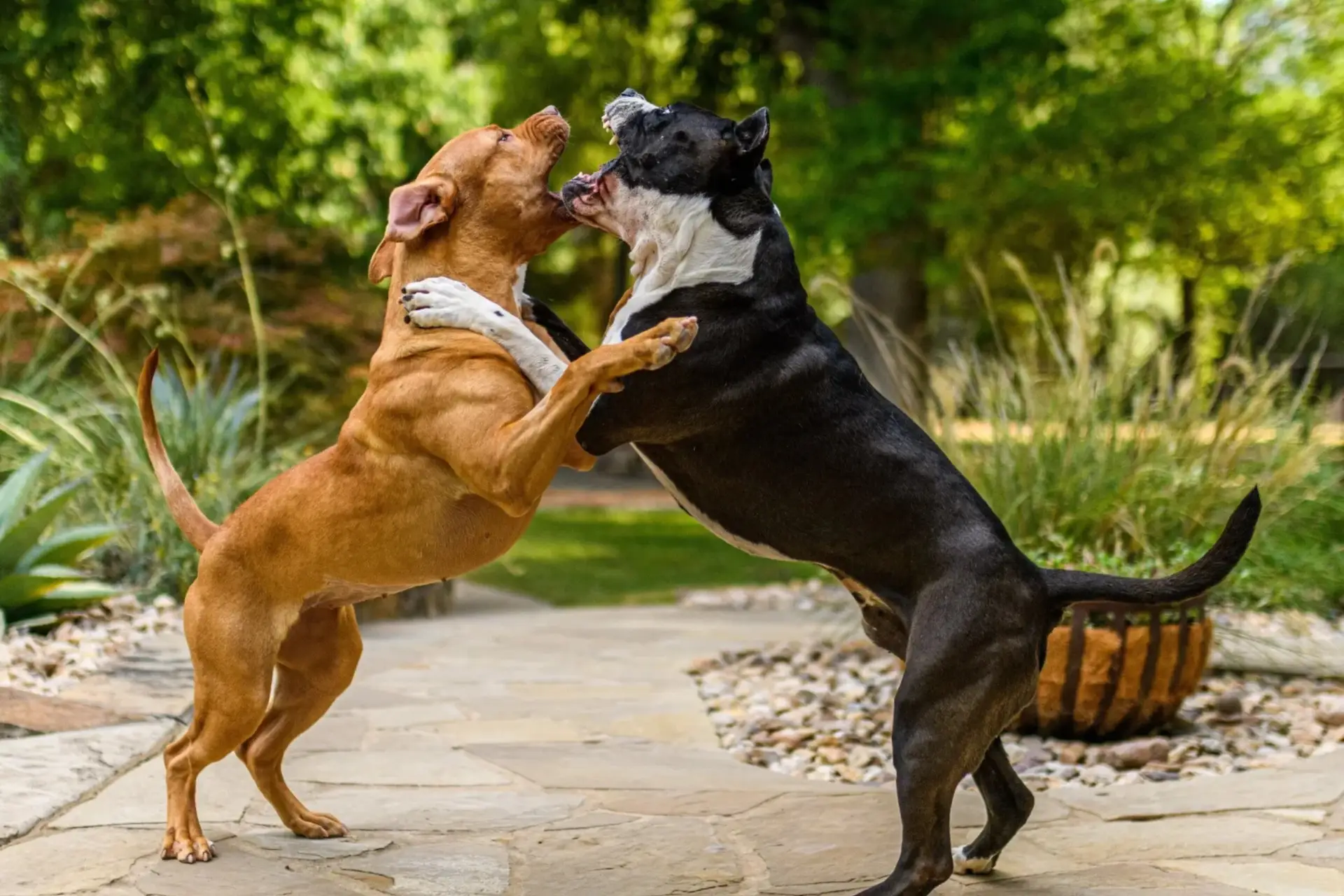
A reactive dog responds intensely to certain triggers. That response might look like barking, lunging, whining, spinning, freezing, growling, or snapping. Many dogs are reactive on leash but seem calmer off leash or at home.
Reactivity is not a personality flaw. It’s usually a combination of emotion (fear, frustration, stress) and a lack of coping skills in that moment.
Reactivity vs. Aggression: What’s the Difference?
This is where many owners get confused. What is a reactive dog compared to an aggressive dog?
- Reactivity is an overreaction to a trigger. The dog may look “out of control,” but the behavior is often driven by fear, anxiety, frustration, or excitement.
- Aggression is behavior intended to increase distance or cause harm. Some reactive dogs are not aggressive at all. Others may show aggressive behaviors, especially if they feel trapped or repeatedly pushed over the threshold.
A dog can be reactive without being dangerous. But reactivity can become a safety issue if it escalates into biting, especially with leash reactivity where the dog can’t create space on their own.
Common Signs of a Reactive Dog
Signs of a reactive dog can be obvious or subtle. Common signs include:
- Barking, lunging, or pulling hard toward or away from a trigger
- Growling, snarling, or snapping
- Stiff body, hard stare, raised hackles
- Whining, frantic scanning, or “can’t settle” behavior
- Jumping, spinning, or redirecting onto the leash
- Taking treats normally until the trigger appears, then refusing food
If your dog is reactive to other dogs, you may notice they’re fine until another dog gets within a certain distance, then the behavior changes fast.
Why Some Dogs Become Reactive
Reactivity usually has a reason. Understanding the “why” helps you choose the right training plan and avoid strategies that make things worse.
Fear and Fear Aggression
Many reactive dogs are scared, even if they look “tough.” Fear aggression in dogs often shows up when a dog feels threatened and doesn’t know how to escape. The leash can make this worse because it removes the dog’s ability to create distance.
Fear-based reactivity is common in dogs who:
- Had limited early social exposure
- Had a scary experience with another dog or person
- Are naturally more sensitive or cautious
- Are in pain or dealing with a medical issue
If reactivity appears suddenly or gets worse quickly, talk to your veterinarian. Pain can change behavior dramatically.
Frustration and Over-Excitement
Some dogs react because they want to greet, chase, or play but the leash prevents it. That frustration can turn into barking, lunging, and “tantrum” behavior. Over time, the dog learns that seeing a trigger predicts a high-arousal moment.
Leash and Barrier Reactivity
Leash-reactive dog behavior is extremely common. Dogs can also react behind fences, windows, or in the car. Barriers create frustration and can make the dog feel trapped, which increases intensity.
This is why leash reactivity often looks worse than off-leash behavior. The leash changes what the dog can do.
How to Spot Your Dog’s Triggers and Threshold
Before you can change behavior, you need to know what sets it off and how close is “too close.”
Start by identifying triggers such as:
- Other dogs (especially certain sizes, colors, or energy levels)
- People (men, kids, people in hats, runners)
- Bikes, scooters, strollers
- Noises, cars, or crowded sidewalks
Then identify your dog’s threshold: the distance where they can still think, take treats, and respond to you. Over threshold, you’ll see the reaction (barking/lunging), and your dog may stop eating or stop hearing you.
A simple way to track this:
- Note the trigger
- Note the distance
- Note your dog’s body language
- Note whether they can take food and respond to cues
This becomes your roadmap for training.
How to Train a Reactive Dog, Step by Step
The steps below are a practical starting point for how to stop reactivity. Move at your dog’s pace. If your dog is already biting, redirecting onto you, or you feel unsafe, skip ahead to the section on getting professional help.
Step 1: Manage the Environment to Prevent Outbursts
Every reaction is practice. The more your dog rehearses the behavior, the stronger it becomes.
Management ideas:
- Walk at quieter times of day
- Avoid tight sidewalks and crowded parks
- Use distance (cross the street, turn around early)
- Block window views if your dog reacts inside the home
- Use a front-clip harness for better control (not a choke/prong as a first step)
Management doesn’t “fix” reactivity, but it keeps training possible.
Step 2: Build Focus With Name and Check-In Cues
Before working around triggers, teach your dog to orient to you.
Practice at home first:
- Say your dog’s name once
- When they look at you, mark it (“yes”) and reward
- Add a simple “check-in” cue like “look” or “with me”
This becomes your foundation skill on walks.
Step 3: Work Below Threshold at a Safe Distance
Training only works when your dog can still learn. If your dog is already barking and lunging, you’re too close.
Start far enough away that your dog can:
- Notice the trigger
- Stay loose in the body
- Take treats
- Respond to your voice
Distance is not failure. Distance is the training tool.
Step 4: Pair Triggers With High-Value Treats
This is where behavior change happens. You’re teaching your dog: “That thing predicts good stuff.”
Use high-value treats for reactive dogs—something your dog doesn’t get at other times, like:
- Chicken, turkey, hot dog slices
- Cheese (tiny pieces)
- Freeze-dried liver
- Soft training treats with a strong smell
When your dog sees the trigger at a safe distance, feed several treats, then stop when the trigger is gone. Over time, the trigger becomes less scary or less frustrating.
Step 5: Practice the Look-at-That Game
The “Look at That” game teaches your dog to notice a trigger, then look back at you.
How it works:
- Your dog looks at the trigger
- You mark (“yes”)
- Your dog turns back to you for a treat
You’re rewarding the calm observation, not the barking/lunging. This is one of the most effective tools for dog reactivity to other dogs situations.
Step 6: Teach a U-Turn for Quick Exits
A U-turn cue gives you a clean way to leave before your dog erupts.
Teach it when nothing is happening:
- Say “this way!”
- Turn and move the other direction quickly
- Reward as your dog follows
On walks, use it early before your dog hits threshold.
Step 7: Close the Distance Gradually
Only reduce distance when your dog is consistently calm at the current distance. If reactions return, you moved too fast.
Progress looks like:
- Fewer reactions
- Faster recovery
- Ability to eat and respond around triggers
- Softer body language
This is real improvement, even if your dog still doesn’t “love” other dogs.
How to Calm a Reactive Dog on a Walk
If you’re looking for how to calm a reactive dog on a walk, focus on lowering arousal and creating space.
In the moment:
- Increase distance immediately (cross the street, step behind a car, turn around)
- Use your U-turn cue
- Keep your voice calm and your leash steady (avoid tight, constant pulling)
- Feed treats as you move away if your dog can still eat
- Let your dog sniff once you’re at a safe distance (sniffing helps decompress)
The goal isn’t to force your dog to “face it.” The goal is to help your dog succeed.
Mistakes That Make Leash Reactivity Worse
Some common mistakes can accidentally increase reactivity:
- Walking too close to triggers “to socialize”
- Punishing growling (it removes warning signs without fixing emotion)
- Letting greetings happen on tight leashes
- Using corrections that increase fear or frustration
- Waiting until the dog is already exploding before trying to redirect
- Repeating cues when your dog is over threshold (they can’t comply)
If you suspect leash aggression, it’s especially important to avoid confrontational methods that increase stress.
How Long Does Reactive Dog Training Take?
There isn’t a single timeline that fits every dog. It depends on:
- How intense the reactions are
- How long the behavior has been happening
- How consistent training and management are
- Whether fear is involved
- Your dog’s genetics and stress level
Some owners see improvement in a few weeks (better focus, fewer blow-ups). Bigger changes like calm walks past other dogs often take months of consistent work. The goal is steady progress, not overnight perfection.
When to Call a Dog Trainer for Reactivity
It’s time to work with a dog trainer for reactive dogs if:
- Your dog has bitten or attempted to bite
- Your dog redirects onto you or the leash during reactions
- You can’t keep your dog under threshold in your neighborhood
- The reactivity is getting worse
- You feel anxious walking your dog (that stress transfers)
- You have kids, frequent visitors, or multiple dogs at home
A trainer can help you identify triggers, set up a plan, and coach your timing because timing matters a lot in reactivity work.
Reactive Dog Training With WC Dog Training
WC Dog Training helps owners in Onslow County, NC, and surrounding areas work through reactivity with clear, structured training that focuses on safety, confidence, and real-life results. Whether your dog struggles with leash reactivity, reacts to other dogs, or shows fear-based behaviors, training starts with understanding what drives the reaction and building a plan that fits your dog, not a one-size-fits-all checklist.
If you’re ready to stop dreading walks and start building calmer behavior step by step, reach out to WC Dog Training to talk through your dog’s triggers and the best next move.
FAQs
Can a Reactive Dog Ever Be Fully Trained?
Some dogs become “non-reactive” in most situations, especially with consistent training and good management. Others may always be a little sensitive, but they can still learn to stay calm, recover quickly, and walk safely. The best goal is reliable, manageable behavior, not forcing your dog to love every trigger.
Should I Socialize My Reactive Dog With Other Dogs?
Socialization does not mean forced greetings. For many reactive dogs, the safest “socialization” is learning to be calm around other dogs at a distance. Controlled setups with the right dogs can help, but random on-leash greetings often make reactivity worse.
Do Certain Breeds Tend to Be More Reactive?
Some breeds and lines can be more sensitive, vocal, or attuned to their environment. But reactivity isn’t only about breed. Early experiences, stress, handling, and training history matter. Any dog can become reactive, and any dog can improve with the right plan.
Transform Your Walks with WC Dog Training
Living with a reactive dog can feel isolating and exhausting, but you do not have to navigate the journey alone. With patience, consistent management, and the right techniques, walks can become peaceful, predictable, and enjoyable again. Every dog learns at their own pace, and having professional guidance makes all the difference in building lasting confidence for both ends of the leash.
If you are ready to take the stress out of your daily walks and help your dog thrive, reach out to Wild Child Dog Training today. We are here to assess your dog’s specific triggers, answer your questions, and design a personalized plan tailored to your lifestyle in Onslow County and the surrounding areas. Contact us to schedule your consultation and take the first step toward calmer, safer walks.