A dog that growls, stiffens, snaps, or becomes tense when someone approaches their food can make mealtimes stressful. If you’re trying to figure out how to stop food aggression with dogs, it’s important to understand what you’re seeing before trying to correct it.
Food aggression in dogs is a form of resource guarding. The dog is protecting something they consider valuable, such as food, treats, bones, or even an empty food bowl. The behavior can range from eating faster when someone approaches to growling, snapping, or biting.
How you handle food aggression depends on what your dog is actually doing. A dog that simply eats faster when you approach may need a different approach than a dog that growls, snaps, or bites to protect its food.
Understanding Food-Related Aggression in Dogs
Food-related aggression happens when a dog feels the need to protect food from a person or another animal. The behavior isn’t always limited to the food in the bowl. Some dogs may also guard treats, chews, bones, food stolen from the counter, or objects they associate with food.
The early signs can be easy to miss. A dog may:
- Eat faster when someone approaches
- Stop eating and watch the person
- Stiffen their body
- Position their body over the bowl
- Lower their head over the food
- Show the whites of their eyes
- Lip lick or display other signs of stress
- Growl
- Show their teeth
- Snap or lunge
A growl is especially important to recognize. It’s a warning that your dog is uncomfortable. Don’t assume that a dog who growls is automatically going to bite, but don’t ignore the warning either.
Food aggression can also appear suddenly. If your dog became aggressive around food when they previously had no problem with people approaching their bowl, consider what has changed. A medical problem, household change, stressful event, or another underlying issue may be involved.
If the change is sudden or unusual for your dog, speak with your veterinarian before treating it as a training problem.
Why Is Resource Guarding a Problem?
Food aggression is one form of resource guarding in dogs, but it isn’t the only one. A dog may also guard toys, treats, bones, beds, stolen objects, favorite resting spots, or even a person they see as valuable. The common factor is that the dog feels the need to keep others away from something they don’t want to lose.
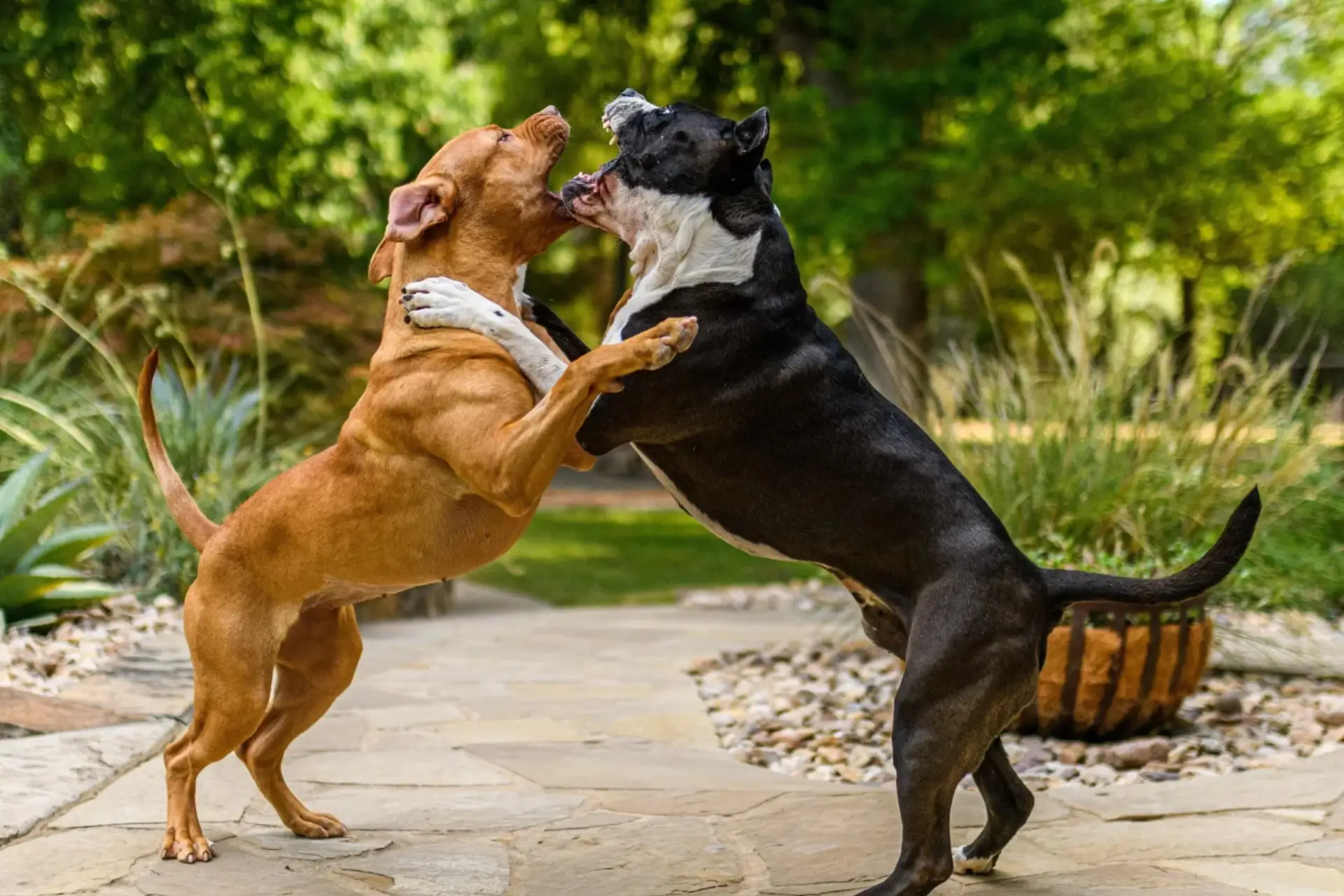
Resource guarding becomes a problem when the behavior escalates beyond simply holding onto an item. A dog may stiffen, freeze, growl, show their teeth, snap, or bite in an attempt to prevent a person or another animal from getting too close. Those warning signs can create safety concerns, especially in homes with children or multiple pets.
In many cases, guarding doesn’t stay limited to one item. A dog that begins by guarding its food bowl may later guard treats, toys, or other valued possessions. Addressing the behavior early can help prevent it from becoming more established or spreading to additional resources.
Because food is one of the most common items dogs guard, food aggression is often the first type of resource guarding owners notice. Recognizing the early signs and responding appropriately can make the behavior easier to manage before it becomes more serious.
How to Stop Food Aggression
There is an important difference between preventing food aggression and changing established food aggression.
If your dog simply eats faster when you approach but shows no stiffening, growling, snapping, or other signs of guarding, you may be able to build a better association with people approaching during meals.
If your dog is already showing clear aggression, don’t treat the following as a DIY exercise. A dog that is guarding aggressively needs to work below their reaction threshold, and pushing too close or moving too quickly can make the problem worse.
Stage 1: Determine What Your Dog Is Actually Doing
Start by observing your dog without testing them.
Don’t walk toward the bowl to see whether they’ll growl. Don’t take the bowl away to “see what happens.” Instead, observe their normal behavior during meals.
Ask yourself:
- Does your dog simply eat faster when you approach?
- Do they stop eating and stare at you?
- Do they stiffen or hover over the bowl?
- Do they growl?
- Have they snapped or lunged?
- Has your dog ever bitten someone over food?
- Does the guarding happen with other objects too?
- Does your dog guard from people, other dogs, or both?
These details help determine how serious the behavior is and what kind of training is appropriate.
Stage 2: Give Your Dog Space During Meals
Before trying to change the behavior, make mealtimes safe.
Feed your dog in an area where they won’t be disturbed. If you have children, make sure they understand that the dog should be left alone while eating. If you have multiple dogs, feeding them separately may prevent competition and reduce the chance of a conflict.
Don’t reach toward the bowl, pet your dog while they’re eating, or allow another pet to approach.
Management doesn’t cure food aggression, but it prevents unnecessary confrontations while you’re working on the problem.
Stage 3: Change What Your Approach Predicts
For mild cases, training can help change your dog’s association with a person approaching their food.
The basic idea is simple: your approach should predict something better, not the loss of food.
Start at a distance where your dog is completely comfortable. You should be far enough away that your dog continues eating normally and shows no signs of tension.
From that distance, toss a high-value treat toward the bowl and continue walking. You aren’t taking anything away. You’re adding something valuable.
Over repeated sessions, your dog can learn that a person approaching doesn’t mean their food will disappear.
The distance should only decrease when your dog remains relaxed. If your dog stops eating, stiffens, stares, growls, or shows another warning sign, you’re too close or moving too quickly.
Back up and make the exercise easier.
Stage 4: Gradually Change the Distance
This part should happen slowly.
You don’t need to stand next to your dog on the first day. Start at a comfortable distance and make small changes only when your dog consistently remains relaxed.
The goal isn’t to see how close you can get to the bowl. The goal is for your dog to feel comfortable when people move around during mealtime.
If your dog becomes tense, stop the exercise and return to the distance where they were comfortable.
Stage 5: Keep the Association Positive
The training needs to remain predictable.
Your dog should learn that a person approaching their food does not mean someone is going to take it away. Avoid creating unnecessary competition around the bowl.
You can also teach useful skills such as “leave it” and “drop it” separately, using safe objects and appropriate trades. These skills can help your dog learn that giving something up doesn’t always mean losing it forever.
Stage 6: Know When to Stop Training on Your Own
If your dog growls, snaps, lunges, or bites when someone approaches their food, don’t keep moving closer to the bowl in an attempt to fix the problem yourself.
The same applies if the behavior has gotten worse, your dog guards multiple resources, or you’re worried that someone in your home could be bitten.
At that point, food-aggressive dog training should be handled under professional guidance. A qualified trainer can evaluate the behavior, determine your dog’s threshold, and establish a plan that doesn’t require you or anyone else to put themselves at risk.
How to Prevent Food Aggression
Prevention is easier when you’re working with a puppy or dog that isn’t showing meaningful guarding behavior yet. The goal is to teach the dog that people approaching their food doesn’t mean their meal is about to disappear.
Don’t create unnecessary situations where your dog has to defend their bowl. Instead, build positive experiences around people being nearby while keeping mealtimes calm.
You can also teach your dog early that trading an item for something better is worthwhile. This can be practiced with toys and other low-risk objects rather than taking food away while they’re eating.
If your dog starts showing signs of guarding, don’t continue with prevention exercises as though nothing has changed. Move to a more careful approach and consider professional help.
Immediate Management Approaches
If your dog already guards food, management should come first.
- Feed your dog in a quiet area away from children and other pets.
- Use a separate room, crate, or gated area when necessary.
- Don’t touch or move the bowl while your dog is eating.
- Don’t allow children to approach a dog with food aggression.
- Pick up the bowl only after the dog has finished and moved away.
- Keep other animals away during meals.
- Don’t leave high-value food items where your dog may feel the need to protect them.
- If something dangerous falls near your dog, don’t reach into the dog’s space to grab it. Use professional guidance to teach safe trading skills.
Management reduces opportunities for the dog to practice guarding while you work on the underlying behavior.
What Never to Do
Food aggression can worsen when people try to prove they are in control. Some common advice involves taking the bowl away, putting your hand in the food, or deliberately disturbing the dog while eating.
Don’t do this.
Don’t Take the Food Away to Test Your Dog
Taking food away can teach your dog exactly what they are worried about: that a person approaching means their food may disappear.
Don’t Put Your Hand in the Bowl
There is no need to repeatedly reach into your dog’s food. Doing so can make mealtime stressful and can teach your dog to expect interference.
Don’t Punish a Growl
A growl is useful information. Your dog is telling you they are uncomfortable.
Punishing the growl doesn’t necessarily change the reason for the behavior. It can instead make the warning less obvious while the underlying problem remains.
Don’t Force Your Dog to Give Up Food
If your dog has something they’re guarding, don’t challenge them by trying to take it away. If the item isn’t dangerous, give them space.
For dangerous items, ask a professional trainer how to safely teach a trade rather than attempting to wrestle the object away.
Don’t Let Children Handle the Problem
Children may not recognize the early signs of resource guarding or understand when a dog needs space.
A child should never be responsible for correcting food aggression or taking food, toys, or other guarded resources from a dog.
Don’t Assume Food Aggression Is About Dominance
Calling a dog “dominant” doesn’t explain why the behavior is happening or tell you what to do about it.
Look at the dog’s behavior, triggers, history, and environment. Those details are much more useful when deciding how to handle food aggression.
Get Professional Help With Food Aggression
If your dog is simply eating faster when you approach, careful prevention and positive associations may be enough to keep the behavior from developing further. But growling, snapping, lunging, or biting changes the situation.
Food aggression can put family members, children, visitors, and other pets at risk. Trying to fix serious guarding by repeatedly approaching the bowl or taking food away can increase that risk.
Wild Child Dog Training works with dogs experiencing resource guarding, aggression, reactivity, anxiety, and other behavioral problems. Training starts with understanding the dog’s behavior and creating a plan that fits the individual dog rather than using the same exercise for every case.
If your dog is aggressive over food or has started guarding resources, explore Wild Child Dog Training’s behavior modification training service for professional help with the problem.